ADMINISTRATION AND DOSAGE
Dosage
Adults
1 – 2 tablets × 3 times a day. Leave at least 6 hours
between doses.
Do not take more than 6 tablets (equal to 3000 mg of
paracetamol and 1200 mg of ibuprofen) in any 24 hours
period.
Elderly
No special dosage modifications are required.
The elderly are at increased risk of the serious
consequences of adverse reactions. If this medicine is
considered necessary, the lowest effective dose should be
used for the shortest possible duration. The patient
should be monitored regularly for gastrointestinal
bleeding during NSAID therapy.
Paediatric
Not recommended to use by children under 18 years.
Administration
This medicine is given orally. To minimize side effects,
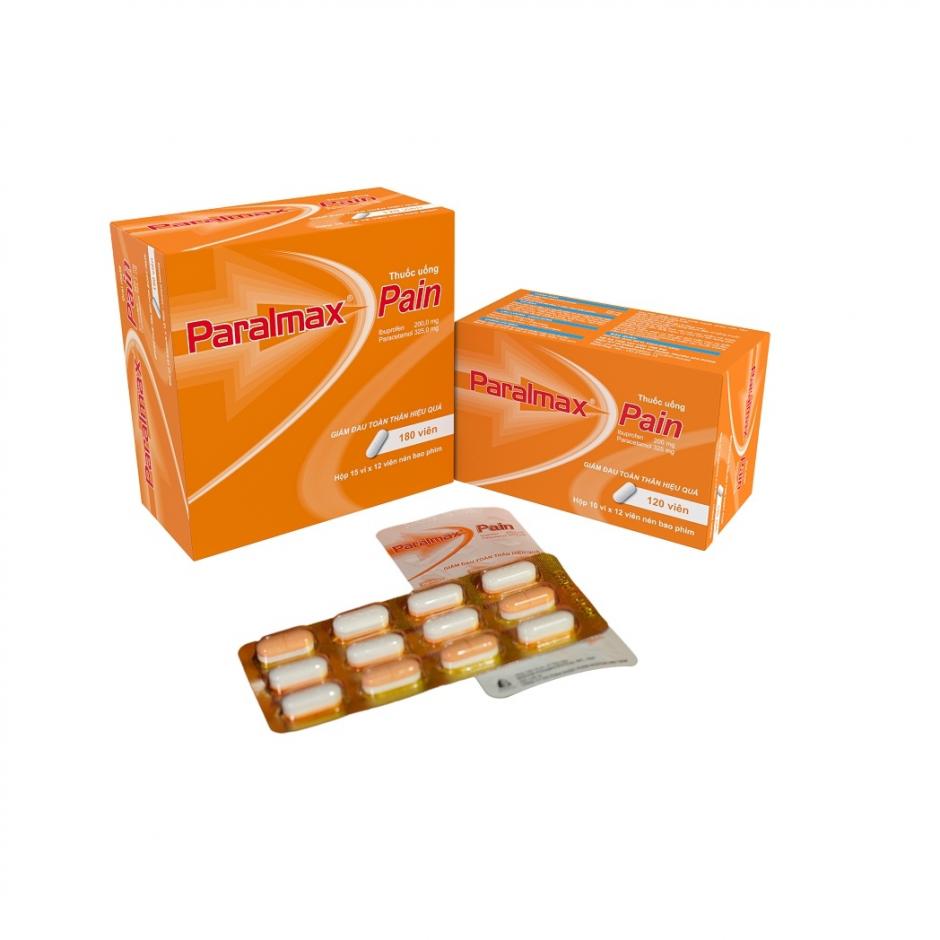
it is recommended that patients take PARALMAX FORTE with
food.
CONTRAINDICATIONS
This product is contraindicated:
In patients with a known hypersensitivity to ibuprofen,
paracetamol, caffeine or any other excipients in the
product.
In patients with a history of hypersensitivity reactions
(e.g. bronchospasm, angioedema, asthma, rhinitis, or
urticaria) associated with aspirin or other NSAIDs.
In patients with active, or a history of recurrent peptic
ulcer/ haemorrhage.
In patients with a history of, or an existing
gastrointestinal ulceration, perforation or bleeding,
including that associated with NSAIDs.
Patients with defects in coagulation.
In patients with severe hepatic failure, severe renal
failure or severe heart failure (NYHA class IV).
During the last trimester of pregnancy due to risk of
premature closure of foetal ductus arteriosus with
possible pulmonary hypertension.
WARNINGS AND PRECAUTIONS
It is recommended to use the lowest effective dose for the
shortest duration necessary to control symptoms. If the
symptoms persist or worsen or if the product is required
for more than 3 days, consult your doctor.
Do not exceed the recommended dose. In order to minimize
risk of overdose and adverse effects, do not use
concomitantly with other NSAIDs or paracetamol containing
products without prescription. Excessive intake of
caffeine (e.g. coffee, tea and some canned drinks) also
should be avoided while taking this product.
The hazards of paracetamol overdose are greater in
patients with non-cirrhotic alcoholic liver disease.
Immediate medical advice should be sought in the event of
an overdose, even if the patient feels well, because of
the risk of delayed, serious liver damage.
Ibuprofen can cause anaphylactoid reaction. Avoid use this
product in patients with aspirin triad (aspirin
sensitivity, asthma, nasal polyps) and use with caution in
asthma patients.
Serious skin reactions, may be fatal, including
exfoliative dermatitis, Stevens-Johnson syndrome (SJS),
and toxic epidermal necrolysis (TEN), have been reported
very rarely in association with the use of paracetamol and
ibuprofen. Patients appear to be at highest risk of these
reactions early in the course of therapy, the onset of the
reaction occurring in the majority of cases within the
first month of treatment. Use of this product should be
discontinued at the first appearance of skin rash, mucosal
lesions, or any other sign of hypersensitivity.
Caution is required in patients with systemic lupus
erythematous (SLE) and mixed connective tissue disease
disorders due to increased risk of aseptic meningitis.
Clinical studies suggest that use of ibuprofen,
particularly at a high dose (2400 mg/day) may be
associated with a small increased risk of arterial
thrombotic events (e.g., myocardial infarction or stroke).
Overall, epidemiological studies do not suggest that low
dose ibuprofen (e.g. ≤1200mg/day) is associated with an
increased risk of arterial thrombotic events. As a
precautionary measure, ibuprofen should be use with
caution in patient with cardiovascular diseases or
patients with risk factors for cardiovascular events
(e.g., hypertension, hyperlipidaemia, diabetes mellitus,
smoking).
Long term use of ibuprofen may cause unopposed
constriction of renal afferent arterioles, and thus
decrease the glomerular perfusion and glomerular
filtration rate, which can cause fluid retention, edema or
some serious complications (e.g., renal impairment). The
risk of renal toxicity increases in patients with renal or
hepatic impairment or heart failure, in geriatric
patients, in patients with volume depletion and in those
receiving a diuretic, ACEI (angiotensin converting enzyme
inhibitor) or ARB (angiotensin II receptor blocker). These
patients should be only treated with this product after
carefully consideration, and their renal function also
should be monitored.
Ibuprofen is a GI irritant. Some serious GI toxicity
(e.g., bleeding, ulceration, perforation) can occur at any
time during treatment, with or without warning symptoms or
a previous history of serious GI events. The risk is
higher with increasing NSAID doses, coadministration with
corticosteroids, in patients with a history of ulcer,
particularly if complicated with haemorrhage or
perforation, in the elderly, smokers, those with alcohol
dependence and those with poor general health. These
patients should commence treatment on the lowest dose
available. Combination therapy with protective agents
(e.g. misoprostol or proton pump inhibitors) should be
considered for these patients, and also for patients
requiring concomitant low dose aspirin, or other drugs
likely to increase GI risk.
Long term use of ibuprofen and paracetamol may inhibit
platelet aggregation and prolong bleeding time.
Concomitant use with other drugs that also prolong
bleeding time should be avoided.
PREGNANCY AND LACTATION
Pregnancy
There is no experience of use of this product in humans
during pregnancy. In view of the known affects of NSAIDs
on the foetal cardiovascular system (risk of closure of
ductus arteriosus), use in the last trimester is
contraindicated. The onset of labour may be delayed and
duration increased with an increased bleeding tendency in
both mother and child. NSAIDs should not be used during
the first two trimesters of pregnancy or labour unless the
potential benefit to the patient outweighs the potential
risk to the foetus. On the other hand, caffeine is not
recommended for use during pregnancy due to the possible
increased risk of lower birth weight and spontaneous
abortion associated with caffeine consumption.
Lactation
Ibuprofen and its metabolites can pass in very small
amounts (0.0008% of the maternal dose) into the breast
milk. No harmful effects to infants are known.
Paracetamol is excreted in breast milk but not in a
clinically significant amount. Available published data do
not contraindicate breastfeeding.
Caffeine in breast milk may potentially have a stimulating
effect on breast fed infants. Therefore this product
should not be used if you are breast feeding.
SHELF-LIFE
36 months from the manufacturing date. Do not use after
the expiry date.


_Paralmax_fore_900x900.png)