DOSAGE AND ADMINISTRATION
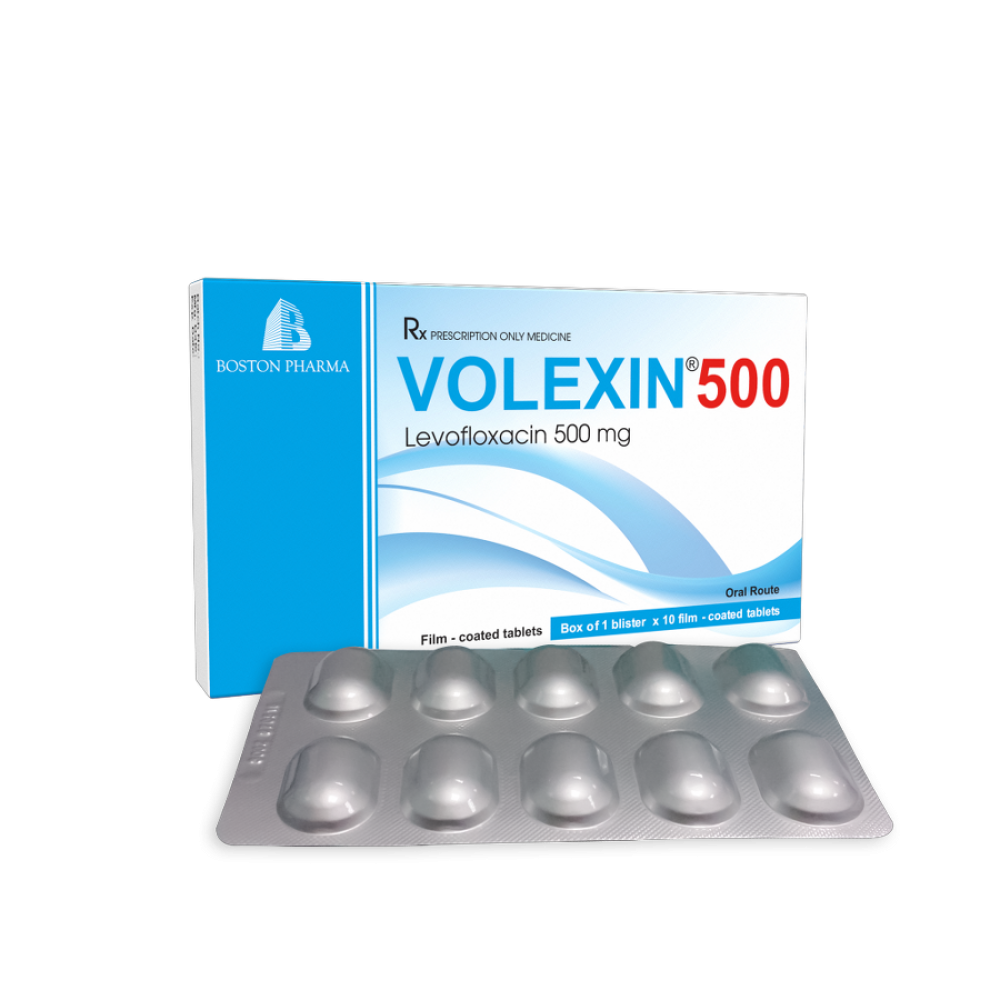
Volexin 500 film-coated tablet is administered orally, the
usual dose is 250 mg, 500 mg or 750 mg every 24 hours, as
indicated by infection and described in Table 1. They may
be divided at the scoreline to adapt the dose. The tablets
may be taken during meals or between meals. Volexin 500
should be taken at least 2 hours before or after iron
salts, zinc salts, magnesium- or aluminium-containing
antacids, or didanosine, and sucralfate administration,
since reduction of absorption can occur.
These dose recommendations apply to patients with ClCr ≥
50 mL/min. For patients with ClCr < 50 mL/min,
adjustment to the dosing regimen are required (see Table
2).
Table 1. Dosage in adult patients with normal renal
function (ClCr ≥ 50 mL/min)
|
Type of Infection
|
Dosed every 24 hours
|
Duration (days)
|
|
Nosocomial Pneumonia
|
750 mg
|
7 – 14
|
|
Community Acquired Pneumonia (1)
|
500 mg
|
7 – 14
|
|
Community Acquired Pneumonia (2)
|
750 mg
|
5
|
|
Complicated Skin and Skin Structure Infections
(SSSI)
|
750 mg
|
7 – 14
|
|
Uncomplicated SSSI
|
500 mg
|
7 – 10
|
|
Chronic Bacterial Prostatitis
|
500 mg
|
28
|
|
Complicated Urinary Tract Infection (cUTI) or
Acute Pyelonephritis (AP) (3)
|
750 mg
|
5
|
|
Complicated Urinary Tract Infection (cUTI) or
Acute Pyelonephritis (AP) (4)
|
250 mg
|
10
|
|
Inhalation Anthrax (post exposure prophylaxis)
(5)
|
500 mg
|
60
|
|
Uncomplicated Urinary Tract Infection
|
250 mg
|
3
|
|
Acute Bacterial Exacerbation of Chronic
Bronchitis (ABECB)
|
500 mg
|
7
|
|
Acute Bacterial Sinusitis (ABS)
|
750 mg
|
5
|
|
500 mg
|
10 – 14
|
(1) Due to methicillin-susceptible
S. aureus, S. pneumoniae (including MDRSP),
H. influenzae, H. parainfluenzae, K. pneumoniae,
Moraxella catarrhalis, Chlamydophila pneumoniae,
Legionella pneumophila,
or M. pneumoniae.
(2) Due to
S. pneumoniae (excluding MDRSP),
H. influenzae, H. parainfluenzae, M. pneumoniae, or M. pneumoniae.
(3) This regimen is indicated for cUTI
due to
E. coli, K. pneumoniae, Proteus mirabilis and AP
due to E. coli, including cases with concurrent
bacteremia.
(4) This regimen is indicated for cUTI
due to
E. faecalis, E. cloacae, E. coli, K. pneumoniae,
Proteus mirabilis, P. aeruginosa; and for AP due to E. coli.
(5) The safety of levofloxacin in adults
for durations of therapy boyond 28 days has not been
studied. Prolonged levofloxacin therapy should only be
used when the benefit outweighs the risk.
Impaired renal function
Table 2. Dosage adjustment in adult patients with renal
impairment (ClCr < 50 mL/min)
|
Dosage in normal renal function every 24
hours
|
Creatinine Clearance
|
|
20 – 49 mL/min
|
10 – 19 mL/min
|
Hemodialysis or Chronic Ambulatory Peritoneal
Dialysis
|
|
750 mg
|
750 mg every 48 hours
|
750 mg initial dose, then 500 mg every 48 hours
|
750 mg initial dose, then 500 mg every 48 hours
|
|
500 mg
|
500 mg initial dose, then 250 mg every 24 hours
|
500 mg initial dose, then 250 mg every 48 hours
|
500 mg initial dose, then 250 mg every 48 hours
|
|
250 mg
|
No dosage adjustment required
|
250 mg every 48 hours. If treating uncomplicated
UTI, then no dosage adjustment is required
|
No information on dosing adjustment is available
|
Impaired liver function
No adjustment of dose is required since levofloxacin is
not metabolized to any relevant extent by the liver and is
mainly excreted by the kidneys.
Elderly population
No adjustment of dose is required in the elderly, other
than that imposed by consideration of renal function.
CONTRAINDICATIONS
Volexin 500 film-coated tablets must not be used:
+ in patients hypersensitive to
levofloxacin or other quinolones or any of the excipients.
+ in patients with epilepsy.
+ in patients with history of tendon
disorders associated to fluoroquinolone administration.
+ in children or growing adolescents,
during pregnancy or in breast-feeding women.
WARNINGS AND PRECAUTIONS
Tendinitis and tendon rupture
Fluoroquinolones, including levofloxacin, have been
associated with an increased risk of tendonitis and tendon
rupture in all ages. This adverse reaction most frequently
involves the Achilles tendon and has also been reported
with the rotator cuff (the shoulder), the hand, the
biceps, the thumb, and other tendon sites. Tendinitis and
tendon rupture, sometimes bilateral, may occur within 48
hours of starting treatment with levofloxacin and have
been reported up to several months after discontinuation
of treatment. The risk of tendinitis and tendon rupture is
increased in patients aged over 60 years, in patients
receiving daily doses of 1000 mg, in those taking
corticosteroids and in patients with kidney, heart or lung
transplants. Other factors that may independently increase
the risk of tendon rupture include strenuous physical
activity, renal failure, and previous tendon disorders
such as rheumatoid arthritis. Discontinue Volexin 500
immediately if the patient experiences pain, swelling,
inflammation or rupture of a tendon. Patients should be
advised to rest at the first sign of tendinitis or tendon
rupture, and to contact their healthcare provider
regarding changing to a non-quinolone antimicrobial drug.
Avoid this product in patients who have a history of
tendon disorders or tendon rupture associated to
fluoroquinolones administration.
Peripheral neuropathy
Cases of sensory or sensorimotor axonal polyneuropathy
affecting small and/or large axons resulting in
paresthesias, hypoesthesias, dysesthesias and weakness
have been reported in patients receiving fluoroquinolones,
including levofloxacin. Symptoms may occur soon after
initiation of levofloxacin and may be irreversible in some
patients.
Discontinue levofloxacin immediately if the patient
experiences symptoms of neuropathy including pain,
burning, tingling, numbness, and/or weakness or other
alterations of sensation including light touch, pain,
temperature, position sense, and vibratory sensation.
Patients predisposed to seizures
Fluoroquinolones, including levofloxacin, may lower the
seizure threshold and may trigger seizures. Levofloxacin
is contraindicated in patients with a history of epilepsy
and, as with other quinolones, should be used with extreme
caution in patients predisposed to seizures or concomitant
treatment with active substance that lower the cerebral
seizure threshold, such as theophylline. In case of
convulsive seizures, treatment with levofloxacin should be
discontinued.
Central nervous system effects
Suicidal thoughts, and attempted or completed suicide may
also occur, especially in patients with a medical history
of depression, or an underlying risk factor for
depression. These reactions may occur following the first
dose. In the event that the patient develops these
reactions, levofloxacin should be discontinued and
appropriate measures instituted. Caution is recommended if
levofloxacin is to be used in psychotic patients or in
patients with history of psychytic disease.
Exacerbation of myasthenia gravis
Fluoroquinolones, including levofloxacin, have
neuromuscular blocking activity and may exacerbate muscle
weakness in patients with myasthenia gravis. Postmarketing
serious adverse reactions including deaths and requirement
for ventilatory support, have been associated with
fluoroquinolone use in patients with myasthenia gravis.
Avoid levofloxacin in patients with a known history of
myasthenia gravis.
Hypersensitivity reactions
Levofloxacin can cause serious, potentially fatal
hypersensitivity reactions (e.g. angioedema up to
anaphylactic shock) occasionally following the initial
dose. Patients should discontinue treatment immediately
and contact their physician or an emergency physician, who
will initiate appropriate emergency measures.
Servere bullous reactions
Cases of servere bullous skin reactions such as
Stevens-Johnson Syndrome (SJS) or Toxic Epidermal
Necrolysis (TEN) have been reported with levofloxacin.
Patients should be advised to contact their doctor
immediately prior to continuing treatment if skin and/or
mucosal reaction occur.
Hepatobiliary disorders
Cases of hepatic necrosis up to fatal hepatic failure have
been reported with levofloxacin, primarily in patients
with severe underlying diseases, e.g. sepsis. Patients
should be advised to stop treatment and contact their
doctor if signs and symptoms of hepatic disease develop
such as anorexia, jaundice, dark urine, pruritus or tender
abdomen.
Clostridium difficile-associated disease (CDAD)
Diarrhea, particularly if severe, persistent and/or
bloody, during or after treatment with levofloxacin
(including several weeks after treatment), may be
symptomatic of Clostridium difficile-associated disease.
CDAD may range in severity from mild to life threatening,
the most severe form of which is pseudomembranous colitis.
It is, therefore, important to consider this diagnosis in
patients who develop serious diarrhea during or after
treatment with levofloxacin. If CDAD is suspected or
confirmed, levofloxacin should be stopped immediately and
appropriate treatment initiated without delay.
Anti-peristaltic medicinal products are contraindicated in
this clinical situation.
Prolongation of the QT interval
Some fluoroquinolones, including levofloxacin, have been
associated with prolongation of the QT interval on the
electrocardiogram and infrequent cases of arrhythmia. Rare
cases of torsade de pointes have been spontaneously
reported during postmarketing surveillance. Volexin 500
should be avoided in patients with known prolongation of
the QT interval, patients with uncorrected electrolyte
imbalance (e.g. hypokalemia, hypomagnesemia), patient with
cardiac disease (e.g. heart failure, myocardial
infarction, bradycardia) and patients receiving drugs that
are known to prolong the QT interval (e.g. Class IA and
III antiarrhythmics, tricyclic antidepressants,
macrolides, antipsychotics). Elderly patients may be more
susceptible to drug-associated effects on the QT interval.
Blood glucose disturbances
As with other fluoroquinolones, disturbances of blood
glucose, including symptomatic hyper- and hypoglycemia,
have been reported with levofloxacin, usually in diabetic
patients receiving concomitant treatment with an oral
hypoglycemic agent (e.g., glyburide) or with insulin. In
diabetic patients, careful monitoring of blood glucose is
recommended.
Photosensitivity/Phototoxicity
Moderate to severe photosensitivity/phototoxicity
reactions, the latter of which may manifest as exaggerated
sunburn reactions (e.g., burning, erythema, exudation,
vesicles, blistering, edema) involving areas exposed to
light (typically the face, “V” area of the neck, extensor
surfaces of the forearms, dorsa of the hands), can be
associated with the use of fluoroquinolones after sun or
UV light exposure. Therefore, excessive exposure to these
sources of light should be avoided. Drug therapy should be
discontinued if photosensitivity/phototoxicity occurs.
Development of drug resistant bacteria
Prescribing levofloxacin in the absence of a proven or
strongly suspected bacterial infection or a prophylactic
indication is unlikely to provide benefit to the patient
and increases the risk of the development of
drug-resistant bacteria.
PREGNANCY AND LACTATION
Pregnancy
There are limited amount of data from the use of
levofloxacin in pregnant women. Animal studies do not
indicate direct or indirect harmful effects with respect
to reproductive toxicity. However in the absence of human
data and due to that experimental data suggest a risk of
damage by fluoroquinolones to the weight-bearing cartilage
of the growing organism, levofloxacin must not be used in
pregnant women.
Lactation
There is insufficient information on the excretion of
levofloxacin in human milk; however other fluoroquinolones
are excreted in breast milk. In the absence of human data
and due to that experimental data suggest a risk of damage
by fluoroquinolones to the weight-bearing cartilage of the
growing organism, levofloxacin must not be used in
breast-feeding women.
SHELF-LIFE
36 months from the manufacturing date. Do not use after
the expiry date.