Children
This medicine is intended for children weighing from 17 to
50 kg (approximately 5 to 13 years old).
THE DOSAGE MUST BE CALCULATED BASED ON THE CHILD'S
WEIGHT. The appropriate age corresponding to the weight is
presented below for reference only. To avoid the risk of
overdose, check and confirm that concomitant medications
(including prescription and over-the-counter medicines) do
not contain paracetamol
(see WARNINGS AND PRECAUTIONS).
Paracetamol is recommended to be administered at a dose of
10-15 mg/kg/dose, every 4 to 6 hours, up to a maximum
daily dose of 60 mg/kg/day. The maximum daily dose should
not exceed 3 g.
|
Weight (kg)
|
Appropriate Age* (years)
|
Dose per administration
|
Interval between doses
|
Maximum daily dose
|
|
17 to < 25
|
5 to < 7
|
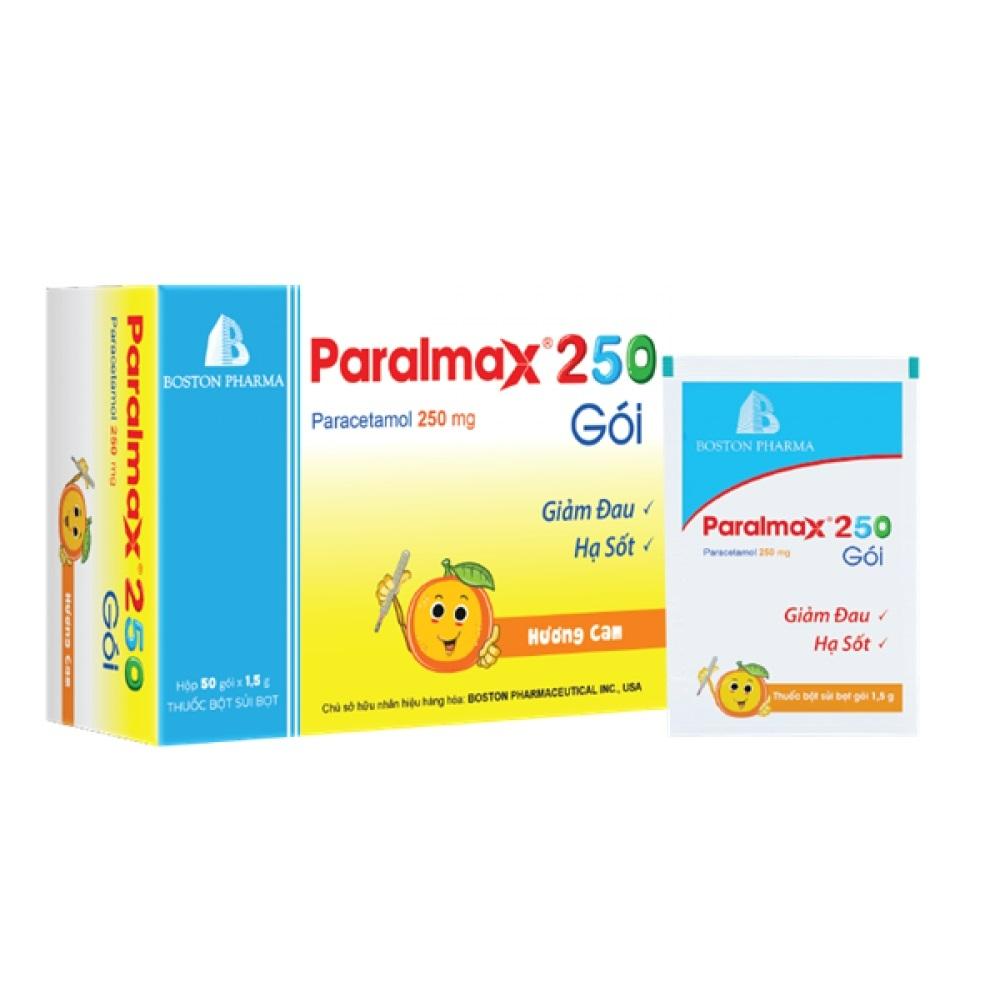
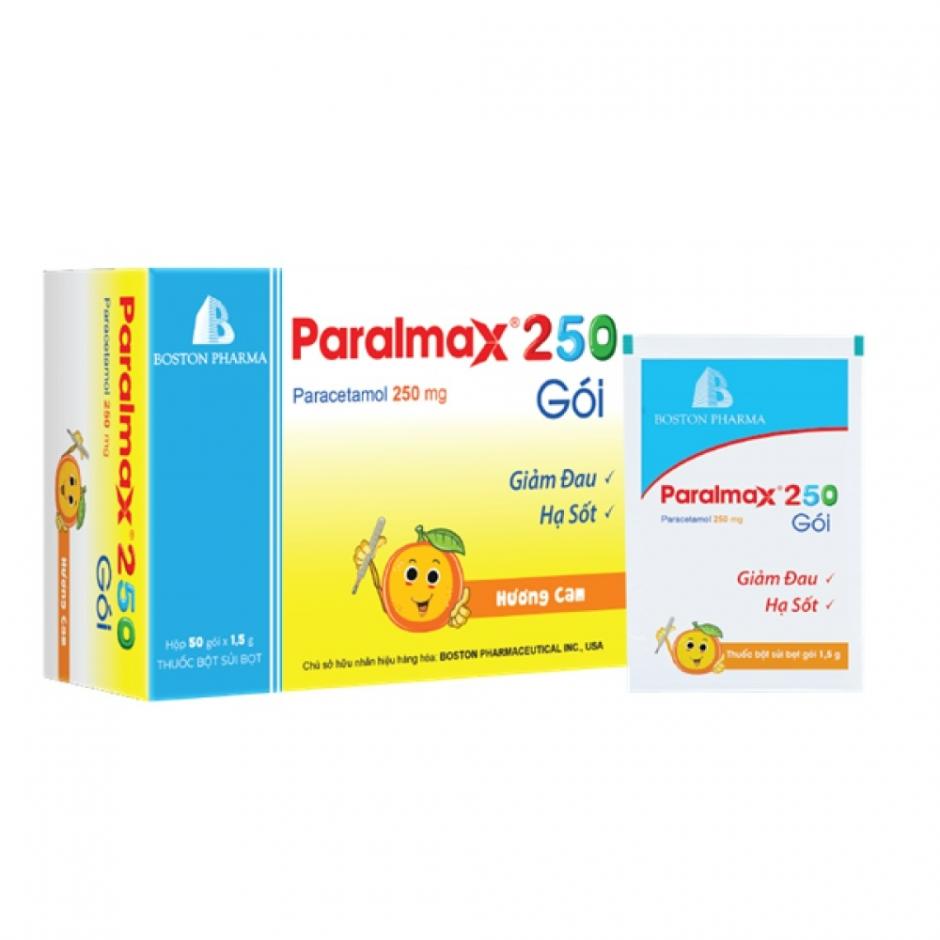
1 sachet (250 mg)
|
6 hours
|
4 sachet
(1000 mg)
|
|
25 to < 33
|
7 to < 10
|
1 sachet (250 mg)
|
4 hours
|
6 sachet
(1500 mg)
|
|
33 to < 50
|
10 to < 13
|
2 sachet (500 mg)
|
6 hours
|
8 sachet
(2000 mg)
|
|
≥ 50
|
13
|
2 sachet (500 mg)
|
4 hours
|
12 sachet
(3000 mg)
|
|
≥ 50
|
> 13
|
Use another oral formulation instead.
|
*Appropriate age corresponding to weight is for reference
only.
Renal impairment
In patients with renal impairment, the minimum interval
between doses should be adjusted according to the table
below:
|
Creatinine clearance (ClCr)
|
Dosing interval
|
|
≥ 50 ml/min
|
4 hours
|
|
10-50 ml/min
|
6 hours
|
|
< 10 ml/min
|
8 hours
|
Hepatic impairment
In patients with hepatic impairment, the dose or interval
between doses should be reduced. The maximum daily dose
should not exceed 60 mg/kg/day (no more than 2 g/day) in
the following cases:
- Adults weighing less than 50 kg.
-
Chronic liver disease or active liver disease,
especially in patients with mild to moderate
hepatocellular insufficiency.
- Gilbert syndrome (familial hyperbilirubinemia).
- Chronic alcoholism.
-
Prolonged malnutrition (low hepatic glutathione
reserves).
- Dehydration.
Administration
Oral use. Pour the sachet of powder into a cup and then
add a small amount of liquid (such as water, milk, fruit
juice). Drink immediately after complete dissolution.
If the child has a fever above 38.5°C, perform the
following steps to enhance the effectiveness of the
medication:
- Remove excess clothing from the child.
- Encourage the child to drink more fluids.
-
Avoid placing the child in overly warm environments.
-
If necessary, bathe the child with lukewarm water, which
is 2°C cooler than the child's body temperature.
Frequency and timing of administration:
Regular use of the medication helps to avoid fluctuations
in pain or fever levels. In children, the interval between
doses should be consistent, including at night, and should
be at least 4 hours apart.
For severe renal impairment (severe renal failure), see
DOSAGE AND ADMINISTRATION, Renal impairment.
4. CONTRAINDICATIONS
This medication should not be used in the following cases:
-
Hypersensitivity to paracetamol or propacetamol
hydrochloride (a paracetamol precursor) or to any
component of the product.
-
Severe hepatic impairment or active liver disease.
-
Phenylketonuria (a congenital metabolic disorder), due
to the presence of aspartame.
-
Fructose intolerance (due to the presence of sorbitol).
-
Glucose-6-Phosphate Dehydrogenase (G6PD) deficiency.
5. WARNINGS AND PRECAUTIONS
Warnings
Inform your doctor immediately if an overdose is suspected
or if a high dose has been accidentally administered. This
medication contains paracetamol. Other medications may
also contain this active ingredient. Do not combine such
medications to avoid exceeding the recommended daily dose
(see DOSAGE AND ADMINISTRATION). Higher doses of
paracetamol than recommended may result in severe liver
damage. Clinical symptoms of liver damage are usually
observed after 1 to 2 days of overdose. Maximum symptoms
of liver damage are usually observed after 3-4 days,
necessitating the use of antidotes as early as possible
(see OVERDOSE AND MANAGEMENT).
Recommended maximum doses:
Children weighing < 40 kg: total dose should not exceed
80 mg/kg/day (see OVERDOSE AND MANAGEMENT).
Children weighing 41-50 kg: total dose should not exceed 3
g/day (see OVERDOSE AND MANAGEMENT).
Adults and children weighing > 50 kg: total paracetamol
dose should not exceed 4 g/day (see OVERDOSE AND
MANAGEMENT).
Use paracetamol cautiously in the following
cases:
Hepatocellular insufficiency including Gilbert syndrome
(familial hyperbilirubinemia) (see DOSAGE AND
ADMINISTRATION, Hepatic impairment).
Severe renal impairment (creatinine clearance ≤ 30
ml/min).
Anorexia, bulimia, or severe cachexia, prolonged
malnutrition (low hepatic glutathione reserves).
Dehydration, hypovolemia.
Doctors should warn patients about serious skin reactions,
although rare, they can be severe and life-threatening,
including Stevens-Johnson syndrome (SJS), toxic epidermal
necrolysis (TEN) or Lyell's syndrome, acute
generalized exanthematous pustulosis (AGEP) with symptoms
described as follows:
Stevens-Johnson syndrome (SJS): drug allergy with blister
formation around natural openings such as eyes, nose,
mouth, ears, genitals, and anus. Additional symptoms may
include high fever, pneumonia, liver and kidney
dysfunction. SJS is diagnosed when at least two natural
openings are affected.
Toxic epidermal necrolysis (TEN): the most severe form of
drug allergy, including:
-
Various skin lesions: measles-like rash, scarlet
fever-like rash, erythema, or fluid-filled blisters that
rapidly spread.
-
Eye mucous membrane lesions: keratitis, purulent
conjunctivitis, corneal ulceration.
-
Gastrointestinal mucous membrane lesions: mouth ulcers,
oral mucosal erosion, pharyngeal, esophageal, gastric,
and intestinal ulcers.
- Genital and urinary mucous membrane lesions.
-
Severe systemic symptoms such as fever, gastrointestinal
bleeding, pneumonia, nephritis, and hepatitis with a
high mortality rate of 15-30%.
Acute generalized exanthematous pustulosis (AGEP): sterile
pustules on a widespread erythematous base. Lesions
typically appear in folds such as the armpits, groin, and
face, then may spread throughout the body. Systemic
symptoms may include fever and high neutrophil counts in
blood tests.
If any initial signs of skin rash or other signs of
hypersensitivity reactions appear, the patient must
discontinue use of the medication. Patients who have
experienced severe skin reactions due to paracetamol
should not use the medication again and should inform
healthcare providers about this issue during medical
consultations.
Precautions
If symptoms persist beyond 5 days, fever lasts more than 3
days, medication is not sufficiently effective, or other
symptoms appear, discontinue treatment and consult a
doctor.
In cases of severe liver or kidney disease, consult a
doctor before using paracetamol.
Excipients:
Sodium: This medication contains 153.84 mg of sodium (the
main component of table salt) in each dose, equivalent to
7.69% of the recommended maximum daily sodium intake for
adults. Patients on a low-sodium diet should account for
this in their daily intake.
Aspartame: This medication contains 8.0 mg of aspartame in
each dose. Aspartame is a source of phenylalanine, which
can be harmful if the patient has phenylketonuria, a rare
genetic disorder that causes phenylalanine to accumulate
because the body cannot process it normally.
Sugar: If the patient has been diagnosed with an
intolerance to some sugars, consult a doctor before taking
this medication.
Sorbitol: Sorbitol is a source of fructose. If the patient
(or child) is diagnosed with intolerance to some sugars,
or if the patient has hereditary fructose intolerance, a
rare genetic disorder in which fructose cannot be
digested, consult a doctor before using this medication.
Sodium Benzoate: This medication contains 5.0 mg of sodium
benzoate per unit dose. Benzoate salts may increase the
risk of jaundice and yellowing of the eyes in newborns (up
to 4 weeks old).
Maltodextrin: Caution is advised for patients with
glucose-galactose malabsorption syndrome.
USE IN PREGNANT AND BREASTFEEDING WOMEN
Not applicable
EFFECT ON THE ABILITY TO DRIVE AND OPERATE
MACHINERY
Not relevant
SHELF LIFE:
36 months (from the manufacturing date); do not use the
medication past the expiration date.
STORAGE CONDITIONS
Store below 30° C. Protect from light. Store in the
original package.