- POSOLOGY AND METHOD OF ADMINISTRATION
Posology
For the treatment of allergy and pruritus:
Dosage must be determined on an individual basis. The
effect of a single dose usually lasts for four to six
hours. For continuous effective relief, the daily
requirement should be given in divided doses, usually
three times a day.
Adults: The therapeutic range is 4-20 mg a day, most
patients requiring 12-16 mg a day. It is recommended that
dosage be initiated with 4 mg three times a day and then
adjusted according to the weight and response of the
patient up to a maximum of 32 mg a day.
Children aged 7-14 years: Usually 4 mg two or three times
a day, according to the patient's weight and response.
If an additional dose is required, it should be given at
bedtime. Maximum 16 mg a day.
Children aged 2-6 years: Initially 2 mg two or three times
a day, adjusted according to the patient's weight and
response. If an additional dose is required, it should be
given at bedtime. Maximum 12 mg a day.
For treatment of vascular headache and migraine
For both prophylactic and therapeutic use, an initial dose
of 4 mg, repeated, if necessary, after half an hour.
Patients who respond usually obtain relief with 8 mg, and
this dose should not be exceeded within a 4- to 6-hour
period.
Maintenance: 4 mg every four to six hours.
Use in the elderly: Cyproheptadine Hydrochloride
should not be used in elderly, debilitated patients.
Elderly patients are more likely to experience dizziness,
sedation, and hypotension.
Administration
For oral administration only
There is no recommended dosage for children under 2 years
old, elderly and debilitated patients
- CONTRAINDICATIONS
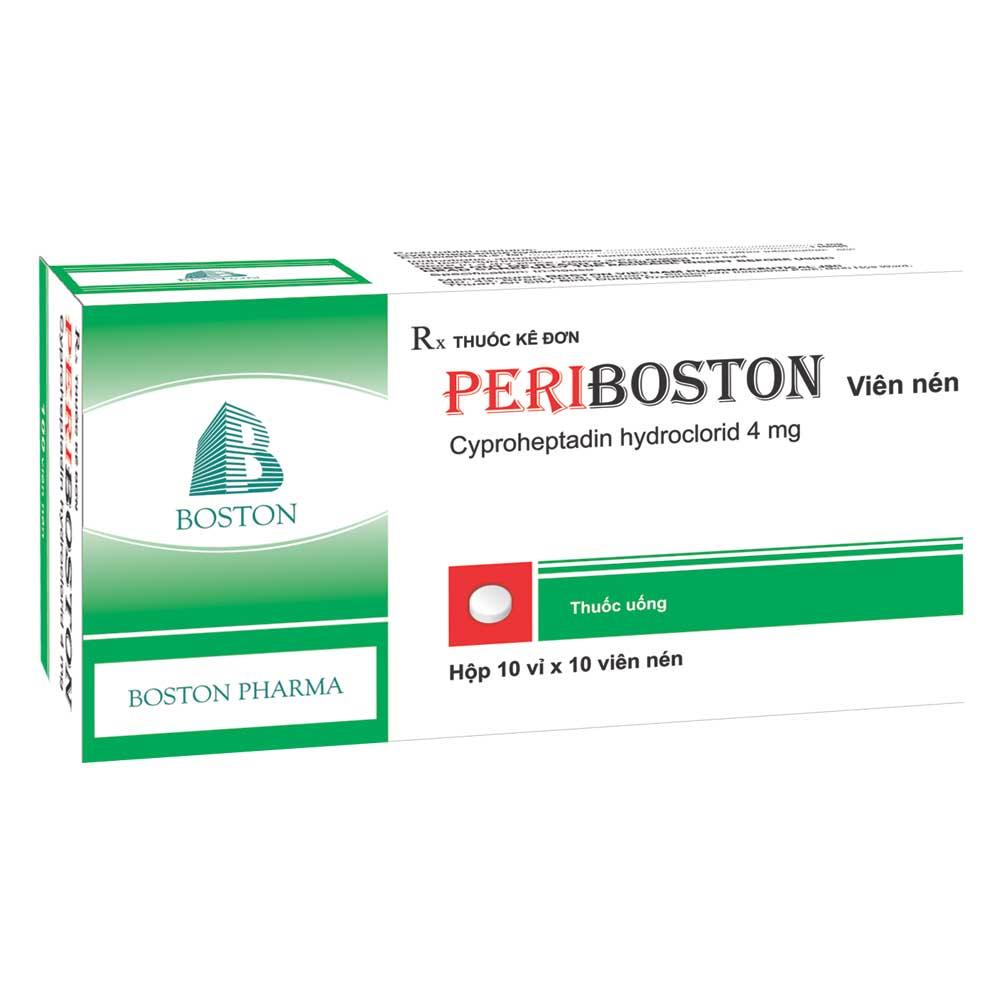
Cyproheptadine Hydrochloride is contraindicated in:
• patients undergoing therapy for an acute asthmatic
attack;
• pregnancy and breast-feeding mothers;
• patients with known sensitivity to cyproheptadine
hydrochloride or drugs with similar chemical
structure;
• concurrent use with monoamine oxidase inhibitors (IMAO);
• glaucoma;
• patients with a history of agranulocytosis
• patients with stenosing peptic ulcer,
• patients with pyloroduodenal obstruction,
• patients with symptomatic prostatic hypertrophy,
• patients with bladder neck obstruction;
• elderly, debilitated patients.
- WARNINGS AND PRECAUTIONS
Antihistamines should not be used to treat lower
respiratory tract symptoms, including those of acute
asthma.
The safety and efficacy of Cyproheptadine is not
established in children under 2 years old.
Overdosage of antihistamines, particularly in infants and
children, may produce hallucinations, central nervous
system depression, convulsions, respiratory and cardiac
arrest, and death.
Antihistamines may diminish mental alertness; conversely,
particularly in the young child, they may occasionally
produce excitation
Patients should be warned against engaging in activities
requiring motor co-ordination and mental alertness, such
as driving a car or operating machinery
Prolonged therapy with antihistamines may cause blood
dyscrasias
Because Cyproheptadine has an atropine-like action, it
should be used cautiously in patients with a history of
bronchial asthma, increased intra-ocular pressure,
hyperthyroidism, cardiovascular disease, or hypertension
Patients with rare hereditary problems of galactose
intolerance, the Lapp lactase deficiency or
glucose-galactose malabsorption should not take this
medicine.
- Shelf-life
36 months from the manufacturing date. Do not use after
the expiry date